
Forecasting
Use workforce data to forecast best-fit, compliant schedules
Discover how workforce forecasting software gives planners tools to anticipate operational changes, with data intelligence to align the right people to the right shifts for efficiency, accuracy, and operational optimisation.
nimbus uses built-in automation and predictive scheduling to align labour demand and shift requirements for strategic workforce planning and cost-efficient decisions.

Predict labour needs
Use data-driven forecasts to plan employee shift coverage against anticipated demand, so that teams are never caught understaffed or overstaffed..
Avoid costly errors
Automated labour forecasting software removed the guesswork from capacity planning, helping to reduce overtime spend and control leakage costs.
Improve your operation
Build scalable rostering processes by using forecasting to examine key performance indicators, identify gaps, and use lessons learnt to create smarter schedule templates over time.
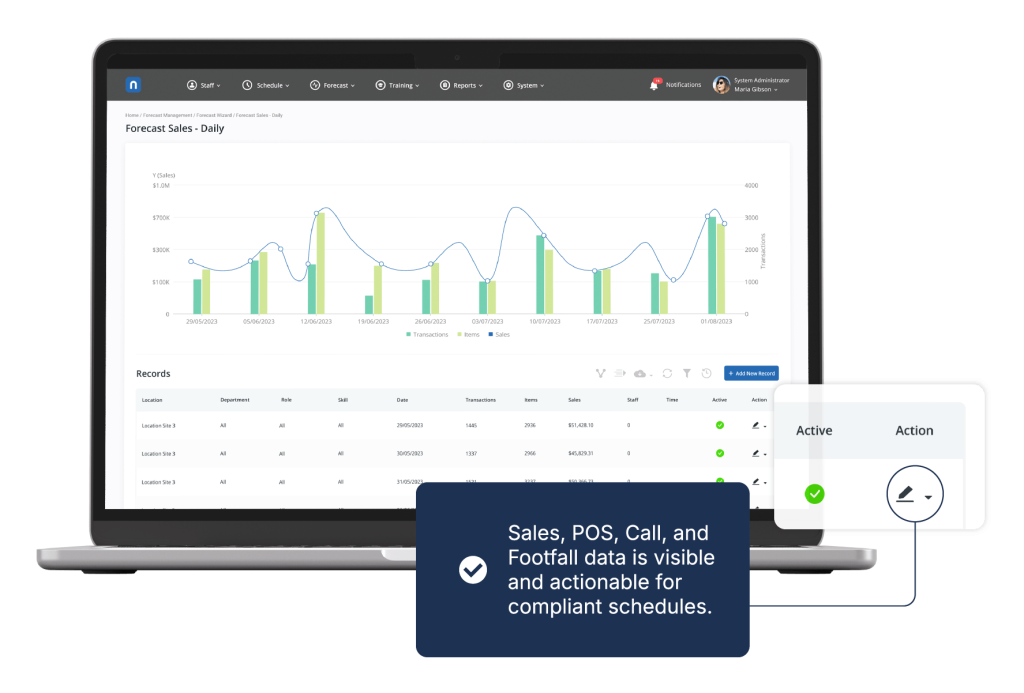
Accurate and compliant shift distribution
Effective labour forecasting starts with understanding demand. nimbus draws on your operational data, including volumes, location, shift patterns, staff skills and budget parameters to generate forecasts and schedule templates that reflect how enterprise organisations manage their workforce.
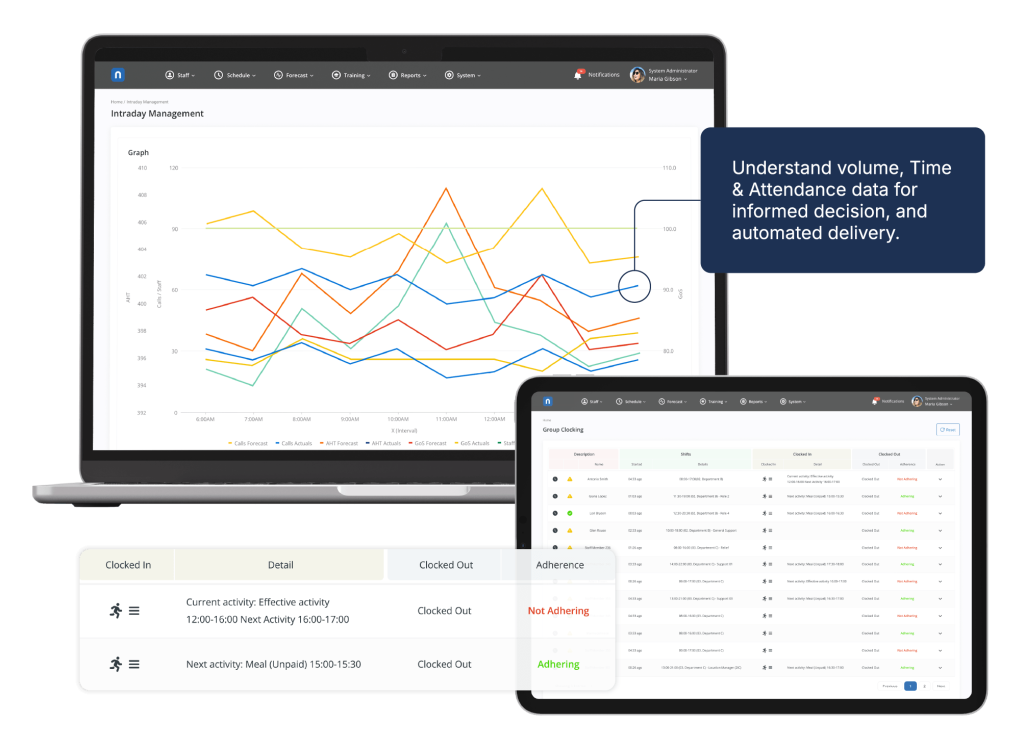
Reduce cost leakage with intraday forecasting
When business conditions change and customer demand shifts, nimbus intraday forecasting supports on-the-day planning to help lower the costs associated with overstaffing and unnecessary overtime. Move towards truly agile scheduling with on-the-day, reactive planning needs when conditions or business needs change.
- Set interval parameters prior to forecast generation to understand on-the-day demand matching
- Adjust interval parameters throughout the day based on live demand signals
- Configure parameters based on team, department and demand levels to ensure budget alignment to cost centre

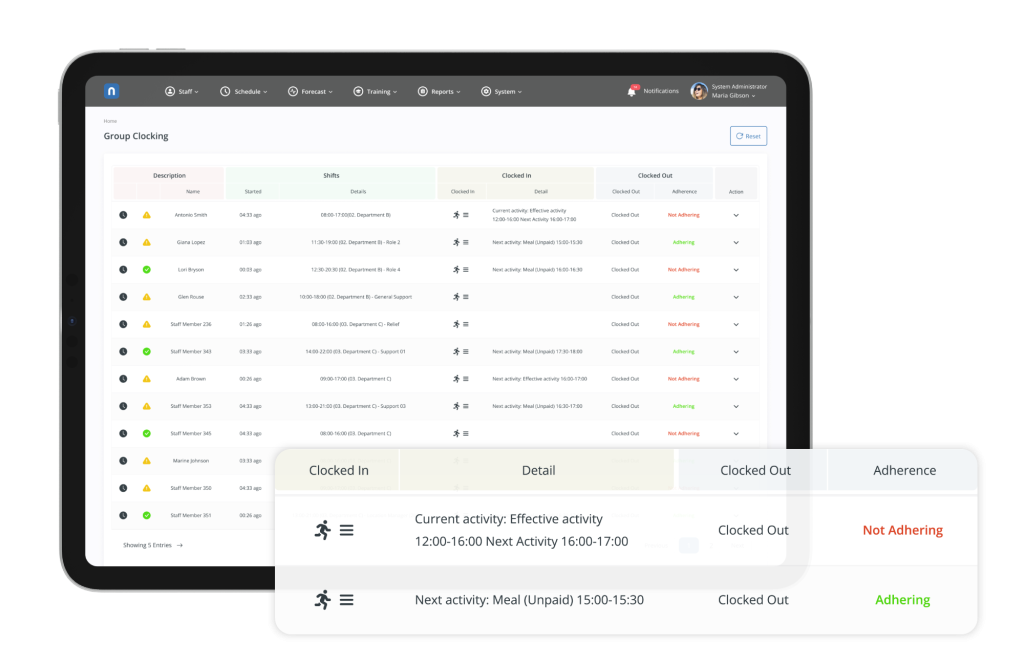
Data to demand matching - what information feeds workforce planning?
Understand the types of data that nimbus’ forecasting software utilises, and how it translates this information
into best-fit, compliant shifts.
Data Input | Examples | Used For |
|---|---|---|
Demand volumes | Forecast volumes, peak periods | Labour coverage planning |
Demand levels by area | Teams, departments | Forecast segmentation |
Location data | Site or location groupings | Coverage by location |
Shift data | Shift patterns, requirements | Alignment to shift needs and capacity planning |
Skills | Skill requirements | Matching labour to demand needs |
Learning feedback | Operational learning signals | Improving forecast accuracy over time |
Interval parameters | Interval length settings | Forecast granularity |
KPI evaluation | Performance metrics (compliance, clocking, adherence, etc) | Identify areas of improvement |
Forecasting controls and visibility
KPI-based forecast evaluation
Evaluating forecasts against compliance, adherence, and operational KPIs to identify inefficiencies, and fine tune future workforce planning.
Interval configuration
Set forecast interval parameters prior to generation, and adjust on-the-day predictions based on operational needs and location-based changes.
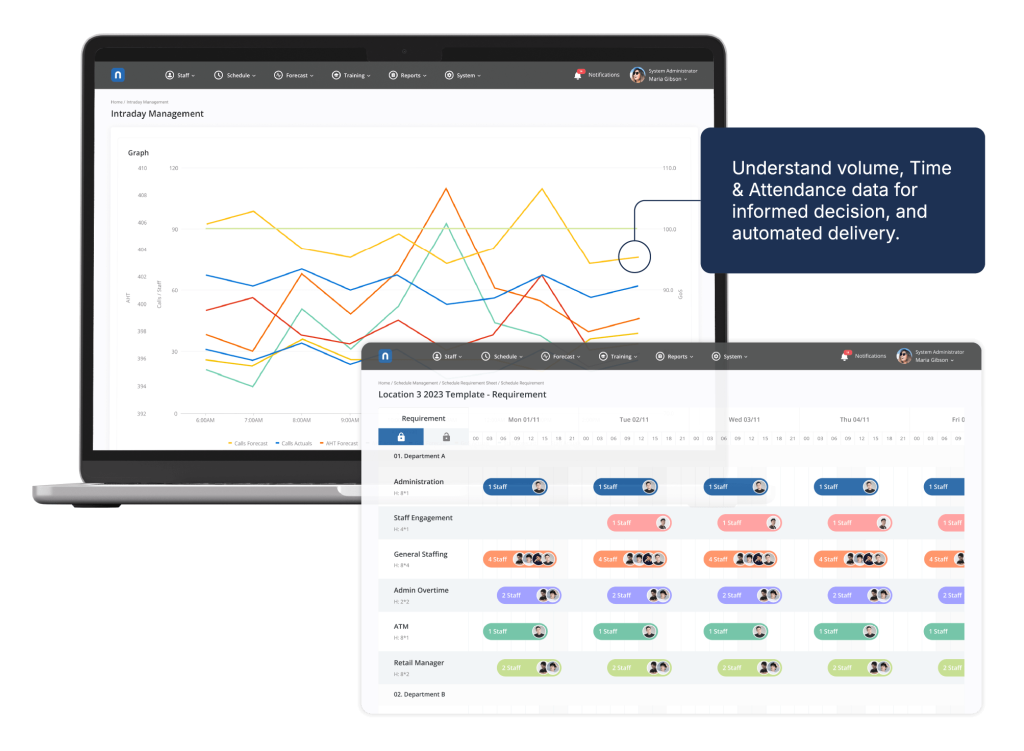
Demand to shift alignment
Generate optimised rosters that align labour demand to shift requirements using analytics, employee data, and compliance signals.
Connect systems for accurate Forecasts
Accurate forecasting doesn’t work in isolation and relies on operational inputs, and nimbus facilitates seamless integration with related workflows.
- Scheduling using forecasts as an input to roster planning
- Reporting and insights to review forecast performance
- Workforce data inputs, including staff skills and location attributes

Forecasting implementation
1
Define
Set capture methods, attendance policies, tolerances and rules for approvals and exceptions.
2
Build
Clock on and off via app or device, add attendances and record work time accurately across all shifts and locations.
3
Publish
Compare scheduled vs worked time, review variances and inaccuracies, approve timesheets and pass payroll-ready outputs downstream.
FAQs
What is workforce forecasting software?
Workforce forecasting software uses operational data to predict future labour demands, helping organisations to strategically plan staffing coverage, manage costs, and avoid unnecessary staffing.
What is labour demand forecasting software used for?
Labour demand forecasting software supports coverage planning during peak times and helps reduce understaffing, unplanned overtime, and reactive scheduling decisions that lack data context.
What is the difference between labour forecasting software and scheduling software?
Forecasting software predicts demand and staffing needs, whereas scheduling applies that input to build accurate, compliant rosters. Both are connected in the nimbus platform.
What is intraday forecasting?
Intraday forecasting adjusts projected staffing needs throughout the day based on live workforce signals. Helping managers to respond to changing work conditions and updated demand needs.
What inputs improve forecast accuracy?
nimbus applies a variety of inputs to improve forecast accuracy:
- Volumes
- Location
- Shift data
- Skills
- Interval parameters
- KPI evaluation.
Ready to modernise your workforce data?
Give your teams a single source of truth for staff data — accurate, compliant, and ready for rostering, time, and payroll.